
Lakes
How Weather Affects Lake Fishing Conditions
Air temperature, wind, clouds, and rain change a lake’s surface quickly. They do not replace water-column physics, and they do not make every lake equally observable.
StrikeTracks Editorial Team2 min read
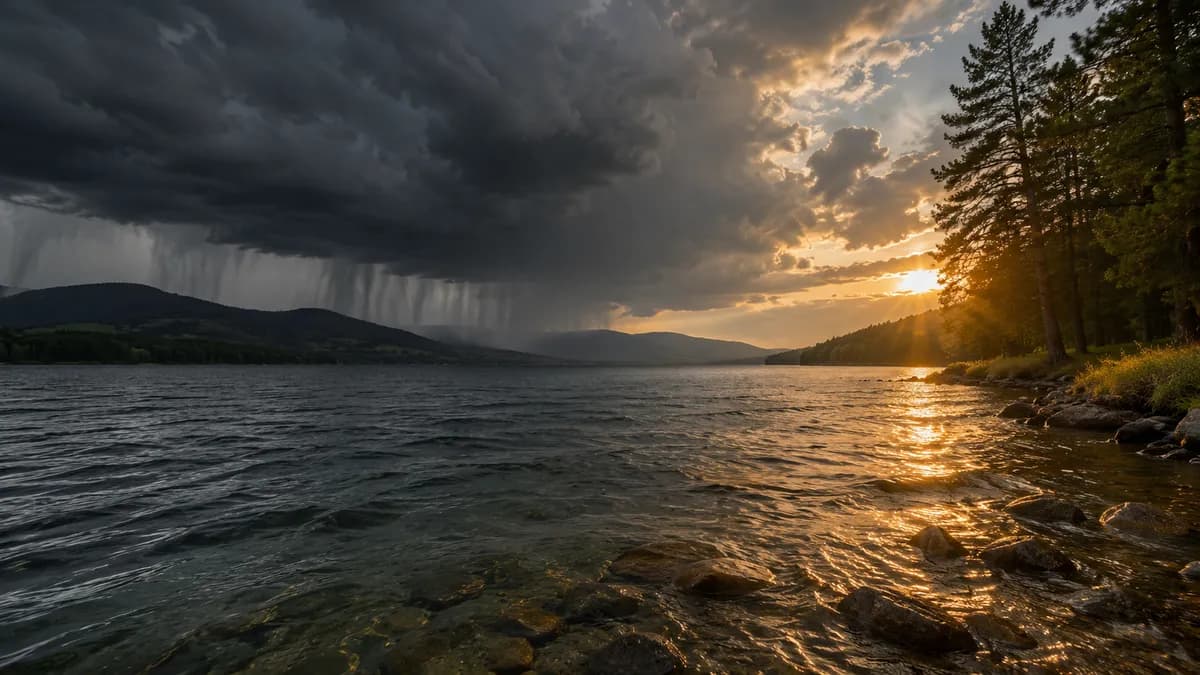
A lake is not a river with the current turned off. Weather still matters — sometimes more visibly than on a shaded trout stream — because so much of what you feel is happening at the surface: wind lanes, chop, falling air temperature, a thunderstorm line. The trap is treating a forecast high as if it were the lake’s temperature from top to bottom.
What weather can honestly tell you
National Weather Service forecasts describe the atmosphere: air temperature, sky, precipitation chances, and wind. Those fields affect comfort, boat control, and how the surface looks. They also influence how heat and mixing reach a lake, which is a slower, deeper process than a two-hour forecast. USGS Water Science School material on lakes is blunt that temperature in a lake varies with both depth and season, and that dissolved oxygen is tied to that structure.
- Wind: builds chop, moves surface water, and can help mix a shallow basin — or make a small-boat day unsafe.
- Clouds and fronts: change light and can change how long you want to be on exposed water. They are not a universal “fish turn on” switch.
- Rain: can stain inlets, raise short-term runoff into a reservoir arm, and bring lightning. Safety first, then fishing.
- Air temperature: useful for clothing and for guessing whether a shallow bay might warm. It is not a substitute for measured water temperature at the depth you will fish.
Surface weather versus the water column
In summer, many lakes stratify: warmer, less dense water sits over colder water. You can have warm shoulders and cold feet in the same swim. A forecast that says 85 °F air does not mean the thermocline moved. Turnover and seasonal mixing are covered separately in Understanding Lake Turnover and Seasonal Fishing Conditions. The point for weather is simpler: do not collapse a three-dimensional lake into one air-temperature number.
How StrikeTracks presents lakes
StrikeTracks lake destinations are not all the same evidence class. Some have qualifying monitoring. Others, when an accepted path exists, may show Estimated Conditions — a clearly labeled, lower-confidence class that is not equal to monitoring-backed data. Estimated is not offered on every lake. Read Monitoring-Backed vs. Estimated Fishing Conditions before you treat a lake page like a river gage.
A lake page may include weather among the observations the destination is configured to use. That weather is still decision support. It does not guarantee fish will feed, that a reservoir’s generation schedule is stable, or that a cold front “ruins” a fishery nationwide. For how to read forecast fields without over-translating them into water, see Reading a Fishing Forecast.
If you are choosing a day, pair the forecast with the lake’s evidence class, any level or temperature the page actually has, and your own limits in wind and lightning. Then look at the water. A glassy cove and a two-foot chop on the main lake can exist an hour apart.
Related Fishing Insights
- Understanding Lake Turnover and Seasonal Fishing Conditions
Many lakes stratify in summer and mix when surface and deep water approach the same density. Turnover is real physics — not a StrikeTracks rating, and not a rule that every pond “turns” on the same week.
- Reading a Fishing Forecast: What Weather Data Actually Tells You
A weather forecast describes the atmosphere. It does not measure river flow, lake temperature at depth, or whether fish will feed. Here is how to use forecast fields without translating them into a bite report.
- Monitoring-Backed vs. Estimated Fishing Conditions: What’s the Difference?
StrikeTracks uses two different evidence classes for fishing conditions. Here is what each one means, why they are not interchangeable, and how to read them honestly.